







Database
Anvil
|
Title
Anvil |
|
Description
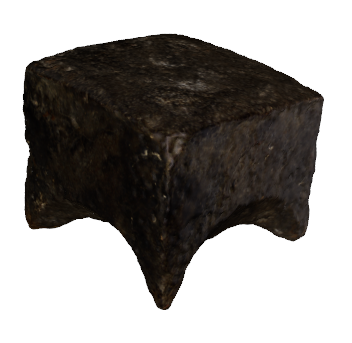
This type of anvil is characterised by a massive parallelepiped body and by the presence of four pegs at the base. The outer sides of the piece are arched and it has four ribs on the inside (they start from each corner and cross in the median area), which helps fastening the anvil well on a wooden stump. Anvils are an indispensible accessory for a blacksmiths workshop and are used in supporting metal pieces that are being processed by forging – hammering. The great number of anvils being discovered in the civil quarters of Sarmizegetusa Regia, as well as the big number of iron objects, some under processing, shows that in the 1st century AD this was one of the greatest metal processing sites in ancient Europe. The production of metal processing workshops in that place was so high and varied (tools, weapons, building materials, objects for everyday use etc.), that it is extremely possible that it was destined not only for the capital area of the Dacian kingdom, but also for other more or less distant regions. Find spot: Grădiştea de Munte – Sarmizegetusa Regia Dimensions: Length – 21,5 cm; Width – 20,5 cm, Weight – 46 kg Material: iron Execution technique: hammering |
|
Geographic coverage
Latitude:45°37′23′′ N ; Longitude: 23°18′43′′ E |
|
Historical Date
1st century BC. - begining of the 2nd century AD. |
|
Time Period
Dacian Era |
|
ID
V 18527 |
|
Scan Type
3D |
|
Scan Format
3DPDF |
|
Digitization Method
|
|
Language
Romanian |
|
Rights
CC BY-NC-ND |
|
Source
National Museum of Transylvanian History, Cluj-Napoca |
|
Data Provider
National Museum of Transylvanian History, Cluj-Napoca |
|
Provider
Romania |


